
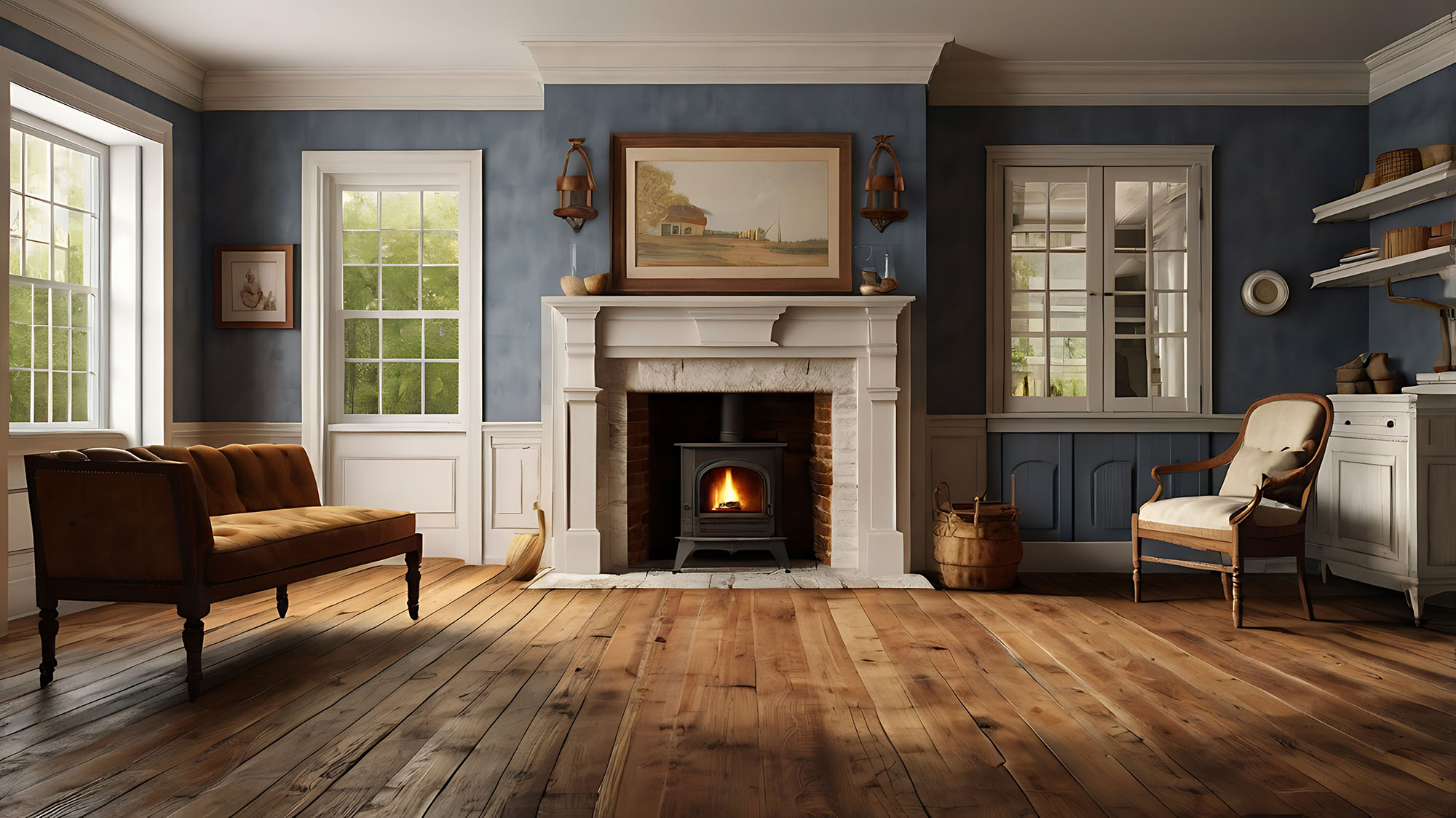
Original wood floors carry the architectural character and craftsmanship of an older home. A historic home renovation in the Tennessee Valley often brings you face to face with century-old planks hidden beneath layers of old carpet, linoleum, or dark shellac. Deciding between historic floor restoration and hardwood replacement shapes how your interior looks, how your budget performs, and how well your floors hold up to modern family living.
Historic neighborhoods across Hamilton County and the surrounding ridges showcase some of the finest residential craftsmanship in the Southeast. Victorian cottages in St. Elmo, Craftsman bungalows in North Shore, brick Foursquares in Fort Wood, and historic bluff-side estates atop Lookout Mountain feature dense, old-growth wood milled over a century ago. Shifting river valley humidity, mountain drafts, decades of foot traffic, and settling foundations affect these classic boards over time. Evaluating plank thickness, structural stability, and wood integrity helps you determine when to restore your original hardwood and when replacement offers the smarter path forward.
Structural and Moisture Realities in Historic Chattanooga and Lookout Mountain Homes
Older properties throughout Chattanooga and Lookout Mountain sit on raised stone piers, native sandstone foundations, or unconditioned crawl spaces. Ground moisture naturally evaporates upward from the soil and mountain rock beneath your living spaces, creating steady vapor pressure against original tongue-and-groove boards.
Century-old homes feature slow-growth virgin timber, such as antique heart pine, American chestnut, or tight-grain white oak. This dense wood resists decay better than modern fast-growth lumber, but prolonged exposure to rising crawl space dampness takes a toll. Decades of seasonal expansion during humid Tennessee summers and contraction during dry winter heating cycles can cause boards to cup, split, or loosen from their square-cut floor nails.
Settling foundation piers along the slopes of Missionary Ridge or the sandstone perches of Lookout Mountain can also cause noticeable floor slope. Before you decide to refinish or replace your hardwood, you need to check the structural levelness of the joists below and verify that rising humidity has not softened the wood fibers from underneath.
Floor Restoration: When to Preserve Original Hardwood
Preserving your original wood floors retains historical authenticity that modern materials struggle to replicate. Floor restoration works best when the boards retain enough physical thickness to endure mechanical sanding without splitting.
Wear Layer Thickness Above the Tongue: Historic solid hardwood typically allows three to five complete sandings over its lifetime. Original planks with at least 1/8-inch of solid wood remaining above the groove can safely undergo drum sanding, stain application, and protective topcoating.
Superficial Finish Wear and Surface Patina: Worn polyurethane, ambered shellac, surface scratches, and minor pet spots often affect only the top finish coat. A standard sand-and-refinish process strips away cloudy surface buildup to reveal the tight, beautiful grain pattern beneath.
Isolated Board Damage: Historic floors with localized water damage near a radiator, fireplace hearth, or old exterior door can often be repaired with salvaged antique timber. Weaving reclaimed heart pine or oak into small damaged sections preserves the balance of the room without forcing a complete replacement.
Hardwood Replacement: When New Flooring Makes Sense
Original wood eventually reaches the end of its functional life. Preserving severely compromised boards costs more in continuous repairs than installing new, high-performance hardwood built for modern family routines.
Exposed Tongue-and-Groove Fasteners: Repeated sandings over the past century wear the wood down to the top of the tongue and groove. Once the mechanical joint becomes wafer-thin or nail heads start poking through the face of the board, the floor can no longer be sanded without destroying the planks.
Widespread Structural Rot or Insect Damage: Chronic moisture rising through unconditioned crawl spaces can cause dry rot, termite damage, or powderpost beetle infestations deep inside the wood fibers. Spongy boards, sagging pathways, and crumbling edges mean the wood has lost its structural load-bearing strength.
Extensive Board Cupping and Irreversible Warping: Severe moisture damage that causes deep cupping or crowning across entire rooms cannot be sanded flat without cutting away the structural integrity of the boards. Replacing the damaged material allows you to install modern vapor barriers and level the subfloor beneath.
Choosing Replacement Planks for Historic Spaces
When original boards cannot be saved, matching the architectural character of your home comes down to balancing period-accurate plank widths against modern subfloor stability. Deciding between solid hardwood or engineered hardwood depends on your foundation type and room location:
Engineered Hardwood Planks: Cross-ply core construction resists shifting caused by Chattanooga river valley humidity, mountain bluff drafts, and rising crawl space moisture, making narrow-plank white oak or hickory an ideal choice for main-level historic rooms.
Solid Hardwood Profiles: Traditional 2-1/4-inch or 3-1/4-inch milled planks deliver original historic sound and multi-generational refinishing capability, performing best on dry upper levels or conditioned subfloors.
Choose the Right Hardwood for Your Home at Dalton Wholesale Floors
Historic floor restoration preserves architectural heritage when boards retain structural thickness, but modern hardwood replacement provides vital moisture defense and long-term stability over older foundations. Founded in 2004 by Calhoun native Todd Stephens, Dalton Wholesale Floors provides direct-from-mill pricing and massive in-stock warehouse inventory across the Southeast to eliminate middleman markups and project delays. Visit our Chattanooga showroom on Gunbarrel Road to compare solid and engineered hardwood displays that honor historic architectural styles, or contact us today to schedule your in-home measurement and project consultation with our local flooring specialists.